

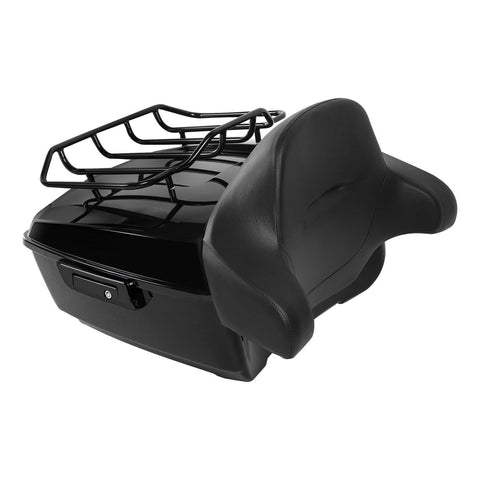


To adapt your heavy bagger setup for the absolute best long-distance experience heading into the Black Hills, focus your layout specifically around maximum cargo efficiency, mechanical safety, and weight distribution.
The goal with a high-capacity touring setup (Tour Pack + Stretched Bags) is keeping your center of gravity predictable while protecting your equipment from the intense heat and varied elements of a mid-August South Dakota run.
The Master Bagger Packing Checklist
📦 Top Load: The 13.7" King Tour Pack
Keep this space restricted to high-frequency items and lightweight gear. Avoid loading heavy objects here to keep the bike from feeling top-heavy during low-speed maneuvers on Main Street.
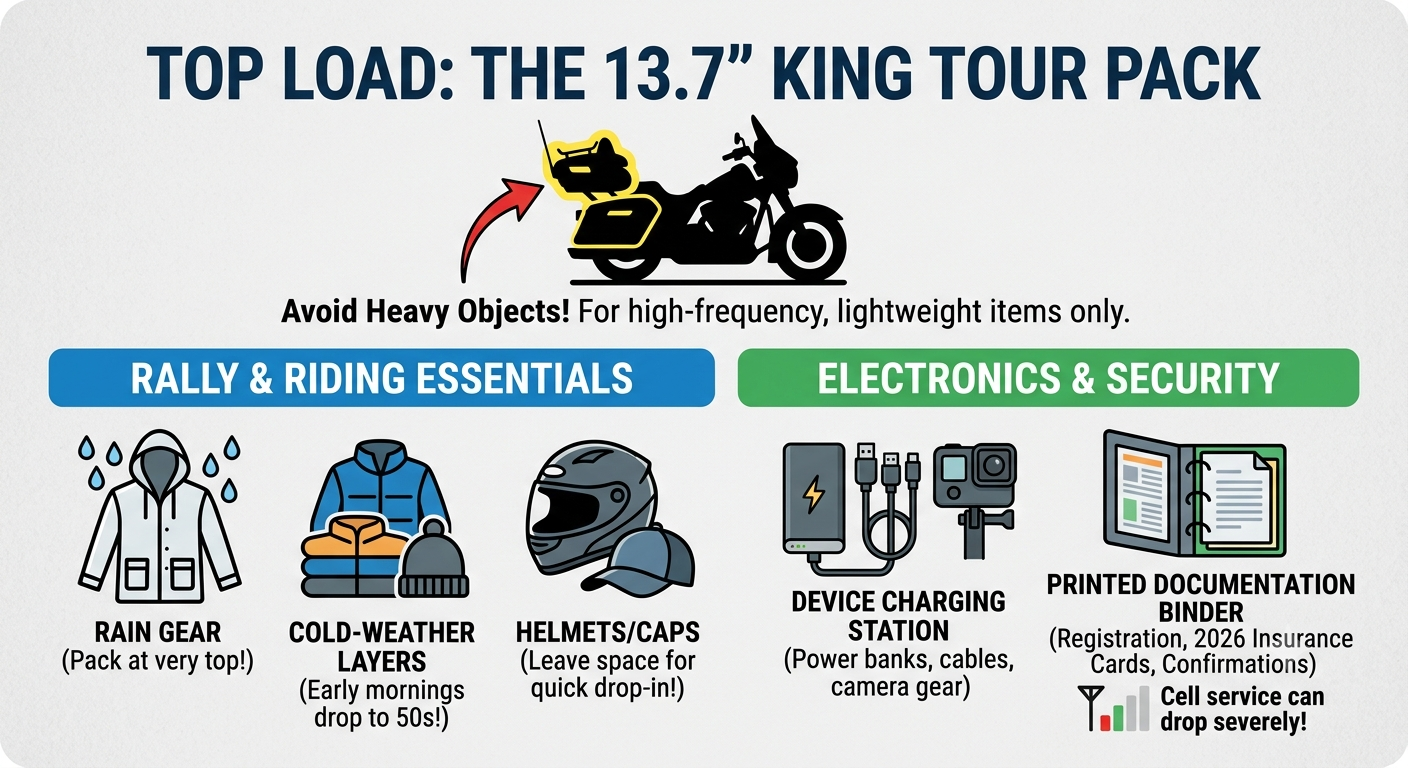
Rally & Riding Essentials:
Rain Gear: Heavy afternoon thunderstorms are a staple of South Dakota in August. Pack rain suits at the very top.
Cold-Weather Layers: Early morning runs through Spearfish Canyon can drop into the 50s, even if it hits 90°F by afternoon.
Helmets/Caps: Space clear enough to quickly drop in helmets when parking.
Electronics & Security:
Device Charging Station: Portable power banks, USB cables routed to internal ports, and camera gear.
Printed Documentation Binder: Physical copies of your registration, 2026 insurance cards, and confirmation paperwork for campgrounds or hotels (cell service can drop severely due to rally network congestion).
💼 Bottom Load: The 5" Stretched Hard Saddlebags
Distribute your heaviest gear into the bottom 5-inch drops of both bags. This lowers your center of gravity and significantly improves high-speed tracking on the interstate.
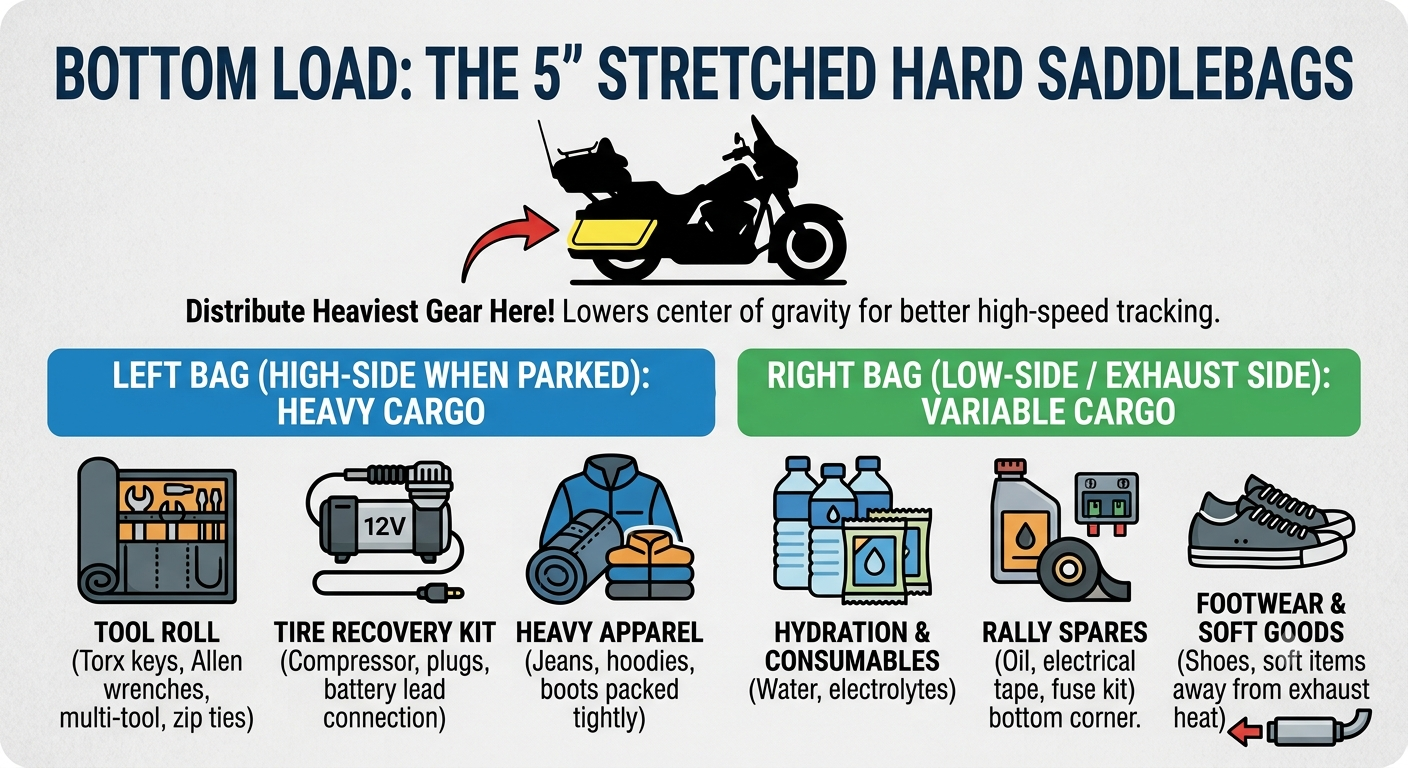
Left Bag (High-Side when Parked): Heavy Cargo
Tool Roll: Full set of Torx keys (T25-T50), Allen wrenches, zip ties, multi-tool, and adjustable wrench.
Tire Recovery Kit: Compact 12V air compressor (plugs into your battery tender lead) and a robust tire plug kit.
Heavy Apparel: Rolled jeans, riding boots, and extra hoodies packed tightly into removable saddlebag liners.
Right Bag (Low-Side when Parked / Exhaust Side): Variable Cargo
Hydration & Consumables: Extra water bottles or electrolyte packets.
Rally Spares: A Small quart of engine oil, a roll of electrical tape, and a microfuse assortment kit.
Footwear & Soft Goods: Camp shoes or sneakers placed away from the bottom corner to prevent excess heat absorption from the exhaust cutouts.
🛠️ Road-Ready Mechanical Verification
Before clicking into first gear for the long haul, run through these final preventative checks to ensure your modified chassis handles the weight smoothly:
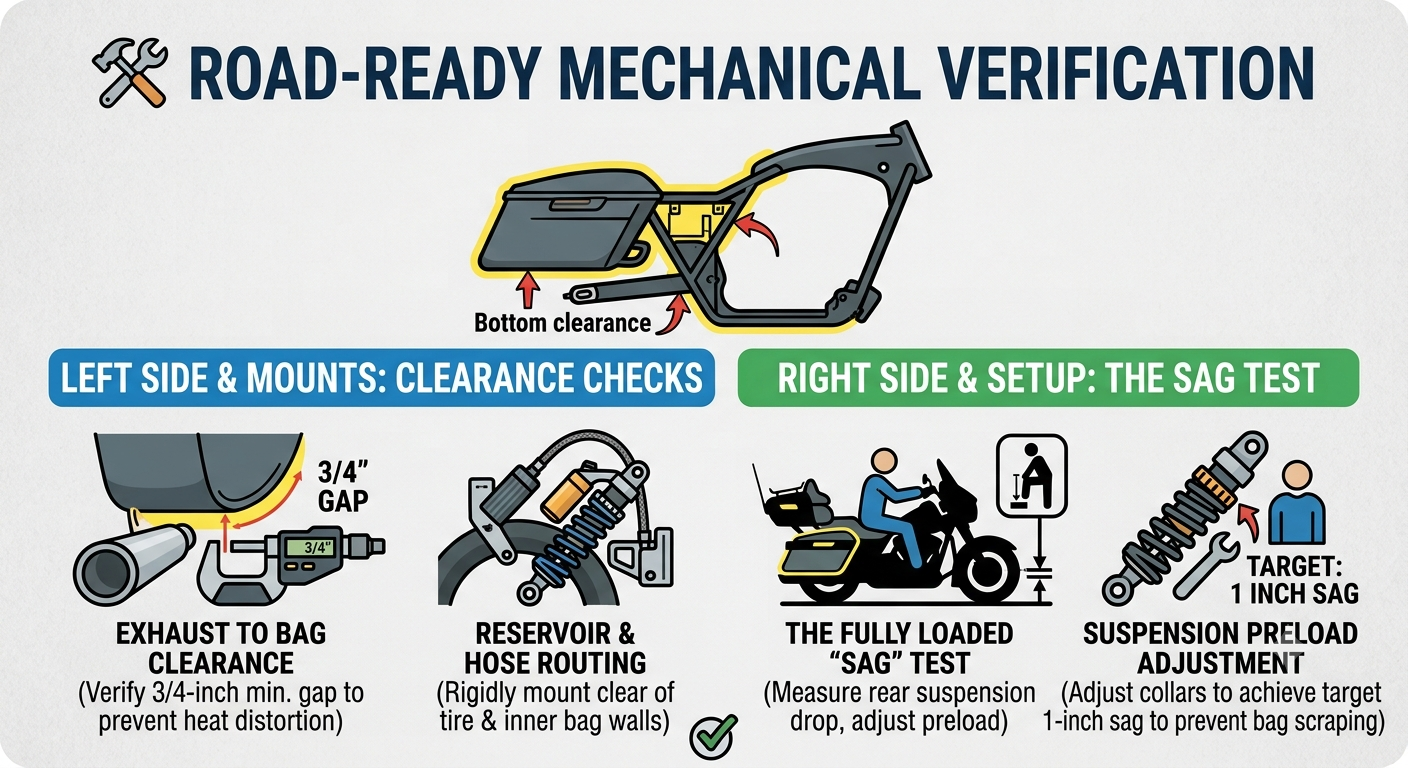
Exhaust Pipe to Bag Clearance: Verify there is at least a 3/4-inch gap between the bottom curve of your 5" stretched bags and your dual exhaust pipes. The continuous heat from an 80 mph highway cruise can distort or blister standard fiberglass or ABS plastic if they sit too close.
Reservoir Positioning & Hose Routing: Double-check that your remote reservoir hoses are routed completely clear of the rear tire's maximum upward travel zone. They must be mounted rigidly using your frame brackets so they cannot rub against the inner walls of the extended saddlebags.
The Fully Loaded "Sag" Test: Fully pack the Tour Pack and saddlebags, fill the fuel tank, and sit on the bike. Have someone measure the rear suspension drop. Adjust the threaded preload collars on your shocks until you have roughly 1 inch of loaded sag. If the suspension sits too low, your extended 5" bags run a high risk of scraping the asphalt during sharp transitions or when leaning through the switchbacks of Iron Mountain Road.


